Short answer: rug colors bleed when a dye that is not colorfast gets wet and moves into the fibers next to it. The usual triggers are a big spill, a pet accident, a wet floor, or a home cleaning with too much water or the wrong product. If you see color running, blot with white towels, do not rub, do not add heat or soap, keep the rug flat with air moving under it, and call a professional fast. Old bleeding is much harder to fix than fresh bleeding.
Most people only learn their rug can bleed when it happens. The good news is that most rug color bleeding can be prevented, and fresh bleeding can often be improved. Good oriental rug cleaning on Long Island always starts with a dye test for this reason. This guide explains why colors run, what to do in the first hour, and how our crews keep dyes where they belong.
What rug color bleeding looks like
Bleeding is easy to confuse with a stain, so it helps to know the signs. In a bleeding rug, the extra color comes from the rug itself, not from something spilled on it.
- A soft pink, blue or brown haze next to a dark color, usually a red, navy or black.
- Color that follows the pattern lines instead of a spill shape.
- A light fringe or light border that has turned pink or gray.
- Marks on the floor or the rug pad under a rug that got wet.
Why rug dyes run: the main causes
A dye is colorfast when it stays locked in the fiber when it gets wet. Many rugs, even good ones, have one or two colors that are not. The cleaning industry magazine Cleanfax has a clear guide on why rugs bleed, and it lines up with what our crews see in Long Island homes:
- Fugitive dyes. Some dyes, very often reds, were never fixed well into the wool. Water lets them move.
- Extra dye left in new or never-washed rugs. If the wool was not rinsed well when the rug was made, the first deep wash can release surplus color, like a new red shirt in the laundry.
- A tea wash or touch-up. Some rugs get a tea wash to soften bright colors, or ink to touch up worn spots. Both can run when wet, and ink does not respond to dye fixers.
- Pet urine. Urine changes chemistry as it sits. Left for weeks, it can damage dyes for good, even in a rug that is otherwise colorfast.
- Too much water and slow drying. The longer a rug stays wet, the more time a loose dye has to travel.
Common triggers in Long Island homes
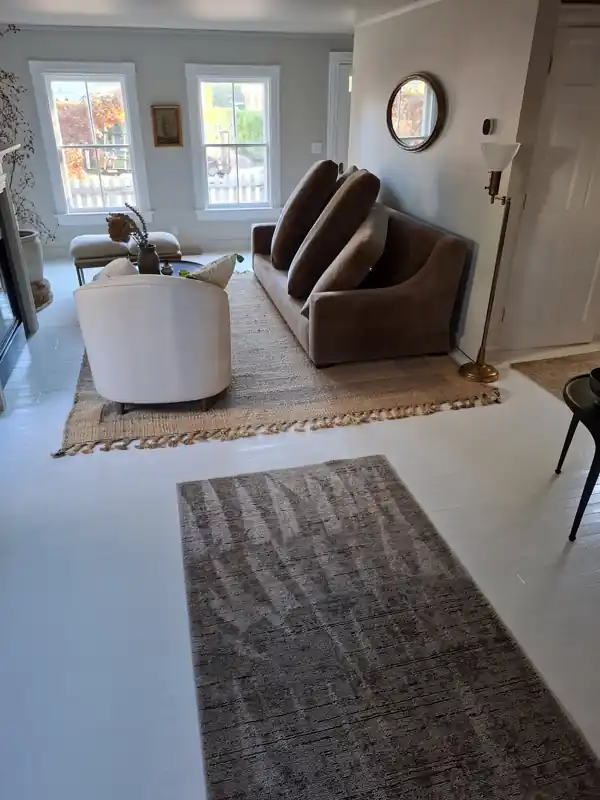
Most bleeding we hear about starts with an ordinary day, not a disaster. A wet basement after a storm soaks the rug that was rolled up in the corner. A dog has an accident on the hallway runner while everyone is at work. Snowy boots sit on the entry rug all afternoon.
Light floors make it more visible. On white painted floors, light oak or pale tile, a red rug that sat wet can leave a pink shadow on the floor itself. That is why we tell people with a rug in a basement or a mudroom to lift it off the floor fast after any water event. Our post on wet basement carpet after heavy rain covers the first 24 hours after a flood.
What to do in the first hour if colors start to run
Fast action makes a big difference. After a few days bleeding sets and becomes much harder to move.
- Stop the water. Lift the rug off the wet floor or soak up the spill. Get the rug off any wet pad.
- Blot, never rub. Press white towels or plain paper towels on the area and lift. Rubbing spreads the loose dye wider.
- Lay it flat and get air moving. Prop the rug on a drying rack or chairs so air reaches both sides, with a fan pointed across it. Keep the face up.
- Call for help the same day. Tell us what got wet and when. A rug with fresh bleeding is a priority job.
Tip from our crews: if you are not sure whether it is bleeding or a stain, press a damp white towel on a dark part of the pattern for 30 seconds. Color on the towel means that dye is loose, and the rug should not get any more water at home.
Mistakes that make bleeding worse
Many of these come up with home shampoo products too. See our post on the risks of DIY rug shampoo before you try a store-bought cleaner on a good rug.
Which rugs are most at risk
| Rug type | Bleeding risk | Why |
|---|---|---|
| Hand-knotted wool with deep reds | Higher | Some reds and some natural dyes are not fully fixed |
| New rugs, never washed | Higher on the first wash | Extra dye can still be sitting in the wool |
| Tea-washed or touched-up rugs | Higher | The wash or the ink can run with water |
| Machine-made synthetic rugs | Usually lower | Synthetic fibers hold most dyes well, but the backing can still stain floors |
| Natural fiber rugs like jute | Low dye risk, high water risk | Jute can brown when it gets too wet, which looks like bleeding |
If you are not sure how your rug was made, our guide to hand-knotted vs. machine-made rugs shows what to look for on the back. For the cleaning itself, see our area rug cleaning service.
Pet accidents and rug dyes
Pet urine is the most common cause of permanent color loss we see. A fresh accident is mostly a liquid problem: blot it, rinse lightly with cool water and blot again. An old accident is a chemistry problem. As urine ages it changes, and it can shift or remove dye in the spot it soaked. Color that is already lost cannot be put back.
That is why we always tell you before we start if a pet spot looks like it has damaged the dye. Our pet stain and odor removal service and our post on pet stains on oriental rugs go deeper.
How our crews test and protect dyes
We treat every fine rug as if it might bleed until a test shows otherwise.
Inspect the rug
We check how it was made, old repairs, pet spots and any bleeding that is already there, and tell you before we give the price.
Test every dark dye
Before any solution touches the rug, we test dye stability in a hidden corner, on each dark color and on the back.
Match the method to the dyes
If a color moves, we change the plan: cooler water, a gentler pH-balanced, eco-friendly solution and controlled moisture, so the rug never sits soaked.
Dry it flat and fast
Rugs dry flat with strong airflow, never hung or stood on end, so loose color has no time to travel.
Fine rugs can also be picked up and washed off the floor, so your pad and floor never get wet. If a rug has gone a long time between cleanings, our post on the signs a rug needs professional cleaning helps you decide when to book.
Can bleeding be fixed?
Often, yes, if it is caught early. Fresh bleeding can usually be lifted out or greatly reduced with the right rinse and fast, even drying. Bleeding that has dried in for weeks, or that was set with heat, is harder. Sometimes it can only be lightened. Pet damage that removed color is permanent. We will look at the rug, tell you honestly what is realistic, and confirm the price before any work begins.
Rug color bleeding help around Long Island
Our crews work in all 70 Nassau and 96 Suffolk towns, with same-day appointments and phones answered 24 hours a day. In Nassau County that includes Garden City, Port Washington, Massapequa, East Hills and Lynbrook. In Suffolk County it includes Huntington, Stony Brook, Sayville and East Hampton. See every town we serve on our locations page, or start with our Long Island carpet cleaning and rug care home page.
Colors running on a rug right now? Blot it, lay it flat, and call us. We test the dyes first, clean with the right method for the fiber, and confirm the price before we start. Your first service is $20 off.
Call (516) 905-5477 Get a free quote